
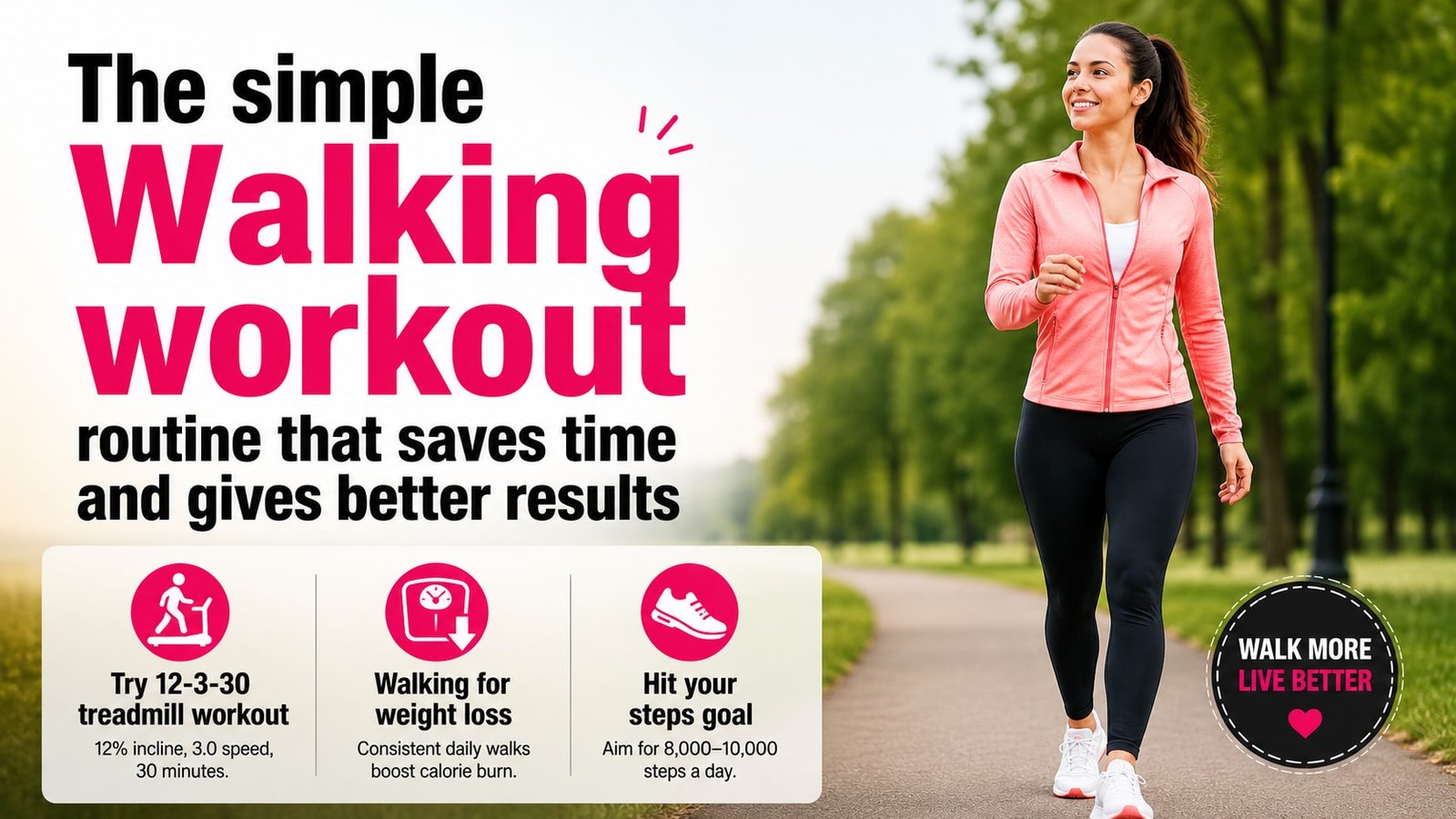
The Walking workout is one of the most underrated yet powerful ways to improve your fitness, burn fat, and boost daily energy. It’s simple, accessible, and doesn’t require expensive equipment or complicated routines. Whether you're a beginner or getting back into fitness, walking can deliver consistent results with minimal time investment.
What makes a walking workout especially effective is its adaptability. You can tailor your pace, incline, and duration to match your goals—whether that’s walking for weight loss, increasing your daily steps goal, or trying structured routines like the 12-3-30 treadmill workout.
Why a Walking Workout Saves Time and Delivers Results Discover how simple walking routines maximize efficiency while supporting fat loss, endurance, and overall health.
A walking workout fits easily into busy schedules while still producing noticeable results. Unlike high-intensity workouts that require recovery days, walking allows you to stay active daily without burnout.
By increasing intensity strategically—like adding incline or speed—you can turn a basic walk into a calorie-burning session. Over time, consistency leads to improved cardiovascular health, better metabolism, and sustainable weight management.
3 Simple Walking Workout Tips That Actually Work Use these proven techniques to make your walking routine more effective and aligned with your fitness goals.
Try the 12-3-30 treadmill workout A structured incline walking method designed to boost calorie burn in just thirty minutes.
This popular routine involves walking at a 12% incline, 3.0 mph speed, for 30 minutes. It’s simple, effective, and ideal for those looking to intensify their walking workout without running.
Stay consistent for weight loss Daily walking builds momentum and supports long-term fat loss without extreme dieting or workouts.
Walking for weight loss works best when done consistently. Even moderate-paced walks can increase calorie burn and improve fat metabolism when practiced daily.
Hit your daily steps goal Tracking steps helps you stay accountable and ensures steady progress toward better health and fitness.
Aiming for 8,000–10,000 steps per day is a practical target for most people. Reaching your steps goal regularly can improve endurance, energy levels, and overall well-being.
Step-by-Step Walking Workout Routine Follow this simple structured plan to maximize fat burn, improve endurance, and stay consistent every week.
- Start with a light warm-up
Begin with a slow 5-minute walk to gradually raise your heart rate and loosen your muscles. This helps prevent injury and prepares your body for a more effective walking workout session.
- Set your walking intention
Decide whether your goal is fat loss, endurance, or hitting a steps goal. Having a clear focus helps you adjust your pace, intensity, and duration for better results.
- Increase your walking pace
Shift into a brisk walking speed where talking becomes slightly challenging. This moderate intensity boosts calorie burn while still being sustainable for longer sessions.
- Add incline if possible
If you're on a treadmill, increase the incline gradually. Outdoors, choose hilly routes. Incline walking engages more muscles and significantly increases workout efficiency.
- Try the 12-3-30 method
Incorporate the 12-3-30 treadmill workout by setting incline to 12%, speed to 3.0 mph, and walking for 30 minutes. Adjust as needed if you're a beginner.
- Track your steps goal
Use a fitness tracker or phone app to monitor your daily steps. Aim for 8,000–10,000 steps to maintain consistency and stay motivated throughout your walking routine.
- Maintain proper posture
Keep your head up, shoulders relaxed, and core engaged while walking. Good posture improves breathing, reduces strain, and makes your workout more effective overall.
- Include short speed bursts
Add 30–60 seconds of faster walking every few minutes. These intervals increase heart rate and calorie burn, helping accelerate results without needing to run.
- Stay consistent daily
Consistency is key for walking for weight loss. Even shorter walks done regularly are more effective than occasional long sessions.
- Cool down and recover
End your session with a slow 5-minute walk to gradually lower your heart rate. This helps reduce muscle soreness and supports recovery.
How to Stay Consistent with Your Walking Workout Simple strategies to build a habit and make walking a sustainable part of your daily routine.
Consistency is what turns a simple walking workout into real results. Schedule your walks like appointments, choose enjoyable routes, and listen to music or podcasts to stay engaged.
You don’t need perfection—just regular movement. Even on busy days, a short walk contributes to your progress and keeps your routine intact.
Final Thoughts on Walking Workout Results Small daily actions like walking can lead to significant long-term changes in health and fitness.
The beauty of a walking workout is its simplicity. With the right approach—like using the 12-3-30 treadmill workout, staying consistent, and hitting your steps goal—you can achieve better results without overwhelming your schedule.
Ready to take the next step? Start your walking workout today and build a routine that fits your lifestyle—your future self will thank you.
Comments
Thoughtful discussion — moderated before publishing.
Start the thread — your note appears after a quick review.