
Weight loss tips are more than quick fixes—they’re sustainable habits that fit into your daily routine. When life gets busy with work or school, having a structured approach can make your weight loss journey feel manageable instead of overwhelming.
This guide is inspired by the idea of building “Survival Kits for Work and School,” but with a smart twist. Instead of just packing supplies, you’ll create a system that supports how to lose weight, reduce cravings, and stay consistent—even on your busiest days.
Why Weight Loss Tips Work Better as a “Survival Kit” Transforming daily habits into a structured kit makes consistency easier and supports long-term weight loss success.
Think of your routine like a survival kit—prepared, intentional, and ready for anything. When you plan your meals, hydration, and movement ahead of time, you remove decision fatigue and stay aligned with your goals.
how to lose weight becomes less about restriction and more about preparation. This approach is especially powerful for students and professionals juggling packed schedules.
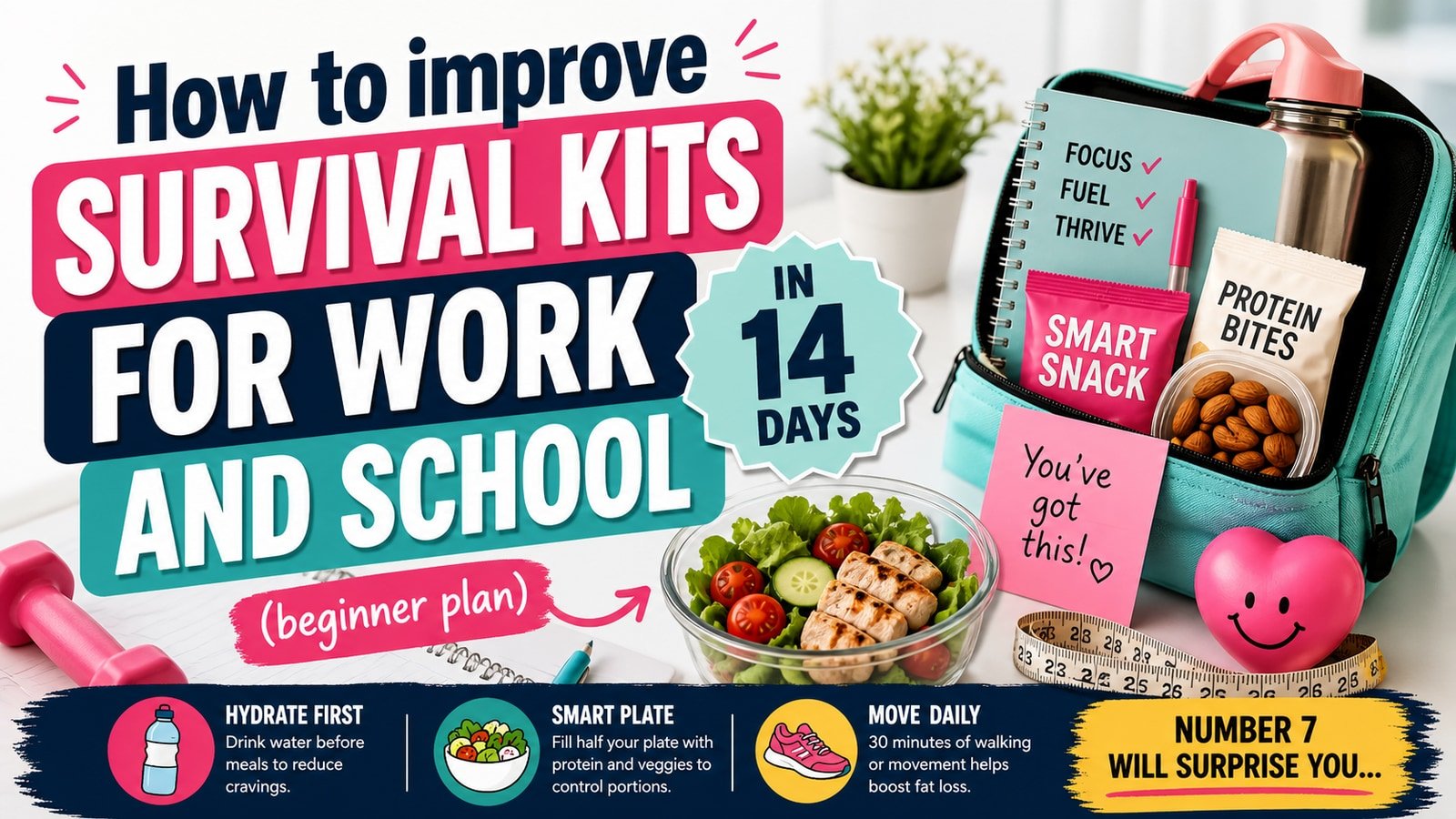
The 3 Core Weight Loss Tips from the Pin These simple but effective habits create a strong foundation for reducing cravings and improving daily energy balance.
Hydrate First Starting with water helps control appetite and supports better digestion throughout the day.
Drinking water before meals can reduce overeating and support belly fat loss. It’s one of the easiest habits to implement in your daily routine.
Build a Smart Plate Balancing protein and vegetables naturally improves portion control without strict dieting rules.
Filling half your plate with protein and veggies helps stabilize blood sugar and keeps you fuller longer, reducing the urge to snack unnecessarily.
Move Daily Consistent movement supports calorie burn and improves overall metabolic health without extreme workouts.
Even 30 minutes of walking or light exercise daily can significantly improve your weight loss journey over time.
14-Day Beginner Plan Using the Survival Kit Method Follow these structured steps to build sustainable habits that support weight loss in real-life work and school settings.
- Prepare your daily water bottle
Start each morning by filling a reusable water bottle and keeping it visible throughout the day. This simple cue encourages consistent hydration and helps reduce unnecessary snacking caused by thirst signals.
- Pack protein-rich snacks
Include items like nuts, yogurt, or protein bars in your survival kit to prevent energy crashes. Having these ready reduces the temptation to grab processed, high-calorie foods during busy work or school hours.
- Plan your meals ahead
Take 10–15 minutes to decide what you’ll eat for the day. Pre-planning meals helps control portions and ensures you include balanced nutrients that support steady energy and fat loss.
- Drink water before meals
Make it a habit to drink a full glass of water 10–15 minutes before eating. This can help reduce hunger levels and prevent overeating, especially during lunch breaks or late dinners.
- Use the half-plate rule
Fill half your plate with vegetables and lean protein sources. This approach naturally limits calorie intake while keeping you satisfied, making it easier to stay consistent without strict dieting.
- Schedule movement breaks
Set reminders to stand, stretch, or walk every few hours. These small bursts of activity increase daily calorie burn and prevent long periods of inactivity common in office or school environments.
- Track your daily habits
Keep a simple checklist of hydration, meals, and movement. Tracking builds awareness and accountability, helping you identify patterns that support or hinder your progress.
- Reduce sugary drinks
Swap sodas and sugary coffees with water, herbal tea, or low-calorie alternatives. This small change can significantly reduce daily calorie intake without requiring major dietary changes.
- Pack a “smart snack kit”
Create a mini snack pack with healthy options to carry in your bag. This prevents impulsive eating and keeps you aligned with your weight loss goals even on hectic days.
- Walk after meals
Take a short 10–15 minute walk after eating to support digestion and stabilize blood sugar levels. This habit also contributes to your daily movement goal effortlessly.
- Prioritize sleep consistency
Aim for a consistent sleep schedule to regulate hunger hormones. Poor sleep can increase cravings and make it harder to maintain a calorie deficit.
- Limit late-night eating
Set a cut-off time for meals in the evening. Avoiding late-night snacking helps reduce unnecessary calorie intake and supports better digestion overnight.
- Stay mindful while eating
Avoid distractions like phones or laptops during meals. Eating mindfully helps you recognize fullness cues and prevents overeating during busy work or study sessions.
- Review and adjust weekly
At the end of each week, evaluate what worked and what didn’t. Adjust your survival kit strategy to better fit your schedule and improve consistency moving forward.
How This Approach Supports Belly Fat Loss Combining hydration, balanced meals, and movement creates a calorie deficit that specifically targets stubborn fat areas.
While spot reduction isn’t possible, these habits collectively support belly fat loss by improving metabolism and reducing overall body fat. The key is consistency, not perfection.
By treating your routine like a survival kit, you remove guesswork and make healthier choices automatic—even during stressful days.
Final Thoughts on Your Weight Loss Journey Small, consistent actions done daily will always outperform extreme diets that are hard to maintain.
Your weight loss journey doesn’t need to be complicated. By applying these simple, structured habits over 14 days, you build a foundation that can last for months or even years.
Start small, stay consistent, and refine your routine as you go.
Ready to take control? Build your survival kit today and start seeing real progress.
Comments
Thoughtful discussion — moderated before publishing.
Start the thread — your note appears after a quick review.